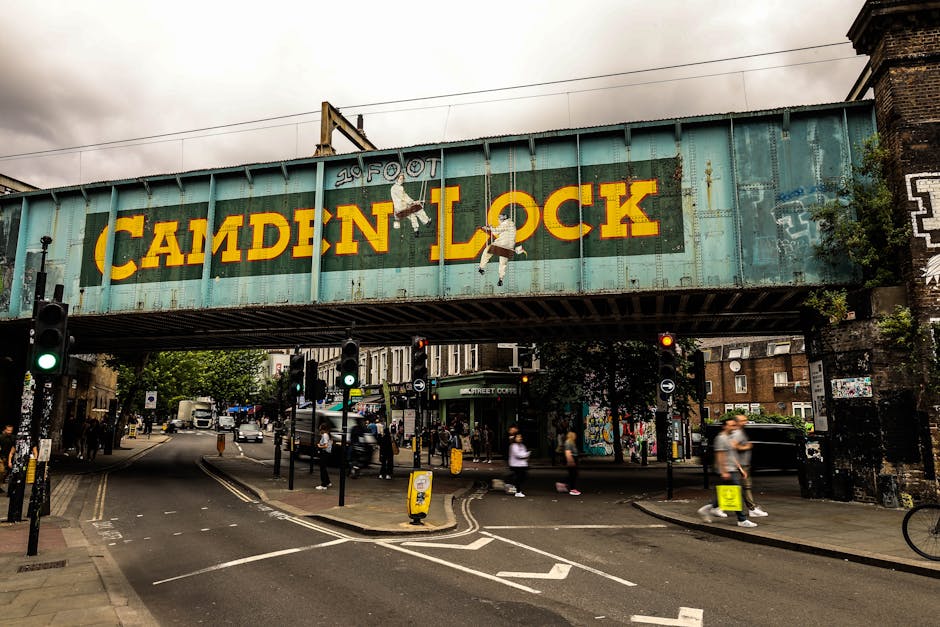






Camden Passage house clearances and rubbish collection N1
Posted on 08/05/2026
Camden Passage house clearances and rubbish collection N1: a practical local guide
If you live, work, rent, or are preparing a property near Camden Passage, rubbish has a habit of piling up at the worst possible moment. A move date slips forward, a landlord wants the flat empty, a side return gets cleared, or a loft full of boxes suddenly becomes your weekend. That is where Camden Passage house clearances and rubbish collection N1 becomes more than just a search phrase - it becomes the simple, sensible way to get a busy job done without turning your day upside down.
This guide explains how local clearance and collection jobs usually work, what to expect, what to avoid, and how to choose the right approach for houses, flats, shops, and mixed-use spaces around Islington. If you want a broader view of what the team handles, take a look at their services overview or the main rubbish removal services page. That gives you the bigger picture before you decide what kind of support you need.
Truth be told, most people do not need a dramatic "full clear-out" story. They just need a reliable plan, clear pricing, and a team that can turn up, work carefully, and leave the place tidy. Simple enough. Not always easy, though.

Why Camden Passage house clearances and rubbish collection N1 Matters
Camden Passage sits in a part of Islington where homes, flats, studios, and small businesses often run close together. That creates a very specific clearance challenge: access can be tight, parking is limited, neighbours are near, and most properties are busy with daily life. A careful clearance is not just about lifting items out. It is about doing it without blocking stairwells, upsetting residents, or leaving waste behind for somebody else to sort out.
For many people, the need starts with a life change. You might be selling a property and want it photo-ready, following a tenancy end, managing a bereavement, or simply reclaiming space from years of clutter. In those moments, a local, organised clearance service can make a difficult task feel manageable. If a sale is involved, the advice in this Islington house-selling guide is worth a read, because empty, presentable rooms do tend to make the next step easier.
There is also a local timing factor. Camden Passage and the surrounding streets can get busy quickly, especially around market times, weekends, and school runs. That means collection windows matter. A good clearance plan respects the street, the neighbours, and the clock. Not glamorous, but very real.
Key takeaway: in this part of N1, the best clearance jobs are the ones that are planned properly, carried out quickly, and finished cleanly the first time.
How Camden Passage house clearances and rubbish collection N1 Works
Most local house clearance and rubbish collection jobs follow a similar pattern, although the scale can vary wildly. One job might be a single mattress, a few bags of mixed waste, and a broken wardrobe. Another might involve clearing an entire flat, attic, cellar, or even a small shop stockroom.
Typically, the process starts with an enquiry and a description of what needs removing. Photos often help a lot. They give a better sense of volume, access, and whether anything needs to be dismantled. Then comes an estimate or quote, followed by a collection slot. On the day, the crew arrives, loads the items, and takes them away for reuse, recycling, or disposal depending on what the waste is.
If the job is more than a few items, it helps to think in layers:
- General household waste: bags, broken small items, packaging, old bits of furniture
- Bulky items: wardrobes, sofas, beds, tables, white goods
- Clearance items: a whole room, loft, basement, or full property
- Special handling waste: anything that needs extra caution or separate handling
In practice, local access matters as much as item type. A second-floor flat with narrow stairs and no lift is a different job from a ground-floor mews property. That is why clear photos and honest details save time on both sides.
If you are comparing general rubbish removal with a fuller clearance, the dedicated house clearance service in Islington is a useful reference point. For broader waste jobs beyond one household, the waste clearance option may be the better fit.
Key Benefits and Practical Advantages
There is a reason people prefer a professional clearance over trying to do everything themselves with repeated trips to the tip. Actually, several reasons.
- Less disruption: one planned visit is easier than multiple van loads and weekend sorting.
- Better use of time: you can keep working, packing, or preparing the property.
- Safer lifting: bulky furniture and awkward staircases can be genuinely hard work.
- Cleaner finish: a proper clearance leaves the space ready for cleaning, decorating, sale, or letting.
- Smarter sorting: reusable items and recyclable materials can often be separated more efficiently.
- Less stress: which, let's face it, is not a small thing when life is already busy.
There is also a practical money angle. A well-planned clearance can prevent wasted journeys and reduce the risk of last-minute surprises. That does not mean it is always the cheapest option in headline terms, but it can be the better-value option once you factor in time, transport, parking, fuel, and your own effort.
For people living in busier parts of Islington, it can also help to think about the property's wider purpose. A flat being prepared for sale needs a different approach from a home being refreshed for another year of living in it. If you are weighing up local property and lifestyle decisions, these guides may help in the background: Islington real estate buyer insights and insider tips on living in Islington.
Who This Is For and When It Makes Sense
This type of service is useful for a surprisingly wide range of people. Some need a full property clear-out. Others just need a quick, clean collection of awkward waste that will not fit in the normal bins.
Common situations where it makes sense
- Preparing a property for sale or new tenants
- Clearing a flat after a tenancy ends
- Helping a family member downsize
- Clearing lofts, basements, sheds, and storage cupboards
- Removing furniture after refurbishment or decorating
- Getting rid of mixed rubbish after a short DIY project
- Clearing out a back room, stock area, or small office in the area
Sometimes the trigger is emotional rather than practical. A bereavement, for example, can make even ordinary household clutter feel heavy. In those cases, an organised, respectful approach matters more than anything else. Other times it is the very opposite: you simply need the space back before Friday, and there is no sentimental story attached. Both are valid.
If your needs are more business-focused, the nearby office clearance service may be helpful, and for shops, flats, and mixed-use buildings around busier local routes, the Upper Street rubbish removal guide for shops and flats gives a good sense of how access and timing can shape the job.
There is no rule that says you must wait until a pile becomes unmanageable. If the clutter is starting to affect how you live or use the space, that is reason enough.
Step-by-Step Guidance
Here is a straightforward way to approach a Camden Passage clearance without overcomplicating it.
- Walk through the space slowly. Identify what is going, what is staying, and what needs a second look. Do not rush this part.
- Group items by type. Furniture, bagged rubbish, electricals, textiles, metal, garden waste, and confidential paperwork should not all be treated the same.
- Take clear photos. Wider shots and a few close-ups help providers understand scale and access. A photo of the staircase or lift can matter more than people expect.
- Check access details. Is there parking nearby? Are there tight corners, coded entry, time restrictions, or a concierge desk?
- Ask what is included. Does the quote include labour, loading, disposal, and cleanup? If not, ask now, not later.
- Book a sensible slot. Early daytime slots are often easier in busier N1 streets. Less traffic, less headache.
- Prepare the items. Move small loose bits into one area if you can. It speeds things up.
- Do a final check before loading starts. It sounds obvious, but people do leave things behind. Often the one box they meant to keep. Naturally.
If you are unsure about pricing or how to compare quotes, start with the pricing and quotes page. A transparent quote should make clear what you are paying for and what might change the total. That is usually the point where confusion disappears.
Expert Tips for Better Results
Most clearance jobs run smoothly when the basics are handled well. But a few small habits can make a big difference.
What tends to work best
- Be brutally honest about volume. Underestimating the amount of waste is one of the fastest ways to cause delays.
- Separate anything valuable. Before the team arrives, remove documents, jewellery, cash, keys, chargers, and sentimental items.
- Keep a simple list. Even a handwritten list on the kitchen table helps when multiple people are involved.
- Photograph the finished rooms. This is useful for landlords, letting agents, solicitors, and your own records.
- Think about recycling early. Wood, metal, cardboard, and some electrical items may be handled differently.
One small real-world observation: the jobs that go easiest are rarely the tidiest at the start. They are the ones where the customer is decisive. "This goes, this stays, this I'm still thinking about." That clarity beats a perfectly organised pile that nobody wants to touch.
If sustainability matters to you, it is worth reviewing the company's recycling and sustainability information. Not every item can be reused or recycled, of course, but a responsible service should make the effort to divert as much as practical away from general disposal.
And one more thing: if a job feels too big for one person and a wheelie bin, it probably is. That is not a failure. That is just sensible.

Common Mistakes to Avoid
A few avoidable mistakes show up again and again in house clearance and rubbish collection work. Most are easy to prevent once you know them.
- Leaving access details until the last minute. Narrow stairs, parking bays, and controlled entry can affect timing more than the waste itself.
- Mixing everything together. Bagged rubbish, electrical items, and reusable furniture may not belong in the same pile.
- Forgetting hidden storage spaces. Lofts, under-stairs cupboards, and shed corners have a funny way of being overlooked.
- Assuming every quote is the same. Some include labour, some don't. Some assume easy access, some do not.
- Not checking provider credentials or safety standards. This matters more than people think.
- Leaving sensitive documents in the clearance. That is a headache nobody wants.
There is also a timing mistake. People sometimes book too late and then try to squeeze a bigger job into a tiny window. It can be done, sometimes, but it is rarely graceful. If the property is on a deadline - sale completion, tenancy handover, renovation start - leave room for one small delay. Life in London enjoys testing plans.
Tools, Resources and Recommendations
You do not need specialist equipment to prepare for a clearance, but a few practical tools make the work easier and safer.
- Strong bin bags or rubble sacks for loose waste
- Masking tape and marker to label items that must stay
- Basic gloves for sorting dusty cupboards or lofts
- Phone camera for photos, inventory, and proof of condition
- Screwdriver or Allen key set if furniture needs dismantling
- Old sheets or dust covers to protect items you are keeping during the clear-out
From a decision-making point of view, the most useful resources are often the company pages that explain process, safety, and customer expectations. For example, the insurance and safety information can help reassure you that the work is being handled properly. The about us page is also worth checking if you want to understand who is carrying out the job and how they approach customer care.
If you are still comparing options, the general rubbish removal service in Islington is a good starting point for smaller or mixed-load jobs, while more specific pages help narrow things down once the scale is clearer.
Law, Compliance, Standards, or Best Practice
Clearance and waste collection work in London should always be handled with care. You do not need to become an expert in waste law to make a good choice, but you should expect the provider to follow proper standards and handle waste responsibly.
In simple terms, that means:
- waste should be transported and disposed of responsibly
- items should not be fly-tipped or dumped illegally
- materials should be sorted where practical for reuse or recycling
- workers should act safely around stairs, shared hallways, and public spaces
- customer property should be handled with care, especially in occupied homes
Best practice also includes clear pricing, honest descriptions of what is included, and proper communication before arrival. If a provider seems vague about what happens to collected waste, that is worth questioning. A good company should be able to explain its process in plain English, without sounding like it is hiding behind jargon.
Practical standard to look for: a proper local clearance service should make the job easier for you, not leave you to guess what happens next.
If you are handling items from a renovation, the builders waste disposal service may be more appropriate, especially for mixed rubble, timber offcuts, or packaging from fit-out work. Garden waste is a separate job too, so the garden waste removal page is useful if the clear-out includes plants, soil, or outdoor debris.
Options, Methods, or Comparison Table
People usually have three ways to deal with clearance work: do it yourself, book a one-off rubbish collection, or arrange a fuller house clearance. The right choice depends on time, volume, access, and how much lifting is involved.
| Option | Best for | Pros | Watch-outs |
|---|---|---|---|
| DIY trips | Very small amounts of waste | Full control, flexible timing | Time-consuming, tiring, transport and disposal logistics |
| Rubbish collection | Mixed household waste or bulky items | Quick, convenient, less lifting for you | Needs clear access and accurate item descriptions |
| House clearance | Whole rooms, flats, or full properties | More complete, efficient, suited to larger jobs | May require more planning and clearer sorting |
For Camden Passage properties, the second and third options are often the most realistic. The local layout tends to reward efficiency. If a job involves multiple floors, shared entry points, or a deadline with estate agents or solicitors, the "do it yourself over several weekends" plan can start to look a bit heroic - and a bit silly too, to be fair.
Case Study or Real-World Example
Picture a two-bedroom flat near Camden Passage that is being prepared for a change of tenancy. The place is not badly cluttered, but there are still two wardrobes to remove, a broken desk, several bags of mixed waste, and a loft area full of old boxes. The client does not want a long disruption, because the decorators are coming two days later.
The sensible approach is simple. Photos are sent first. The provider checks access, asks about parking, and confirms whether the furniture needs dismantling. On the day, the team arrives early, clears the bulky items first, then the bagged waste, then does a final sweep. No drama. No confusion about what stays or goes. The flat is left ready for the next stage, and the client can move on with the rest of the plan.
That sort of job is common in N1. The details change, but the pattern does not: limited time, mixed waste, awkward access, and a strong desire to get it done properly the first time. Simple, really - but it only feels simple after the work is over.
Practical Checklist
Use this checklist before booking or on the morning of the clearance.
- Confirm exactly what needs removing
- Separate items you want to keep
- Take photos of the rooms and access points
- Check whether parking or loading access is restricted
- Ask whether labour, disposal, and cleanup are included
- Set aside documents, valuables, and sentimental items
- Note any heavy, fragile, or awkward items
- Let the provider know about stairs, lifts, or narrow hallways
- Choose a time slot that suits local traffic and neighbours
- Do a final room check before the team leaves
If you want to compare the broader range of support available, the services overview is a good final stop before you decide. And if you simply want to know who is behind the work, the about page is a helpful trust signal.
Conclusion
Camden Passage house clearances and rubbish collection N1 is really about making a tricky, often time-sensitive job feel straightforward. Whether you are clearing one room, a full flat, or a mixed waste load after a move or refurb, the best results come from clear planning, honest information, and a team that understands local access and local pressure points.
Keep the job simple where you can. Sort what matters, share good photos, check what is included, and choose a provider that treats the work with care. That alone saves a surprising amount of hassle. And in a busy corner of Islington, less hassle is not a luxury - it is the whole point.
Get a free quote today and see how much you can save.
When the clutter finally goes, the space tends to feel bigger than you remembered. That is a good feeling, honestly. A quiet kind of relief.